Editorial score
7.8/10
A strong niche recommendation, not a universal one.
Spoiler-light Road to Empress 2 review
Road to Empress II is easy to recommend to players who want a long live-action palace drama with consequential choices, strong production design, and many endings to chase. The recommendation becomes more cautious if polished English localization, fast pacing, or a completely AI-free production is essential to you.

Quick verdict
7.8/10
A strong niche recommendation, not a universal one.
Players who enjoy interactive dramas, court intrigue, route planning, achievement cleanup, and replaying decisions.
The English presentation and later pacing are less consistent than the acting, sets, costumes, and overall ambition.
Review scorecard
| Category | Score | Review note |
|---|---|---|
| Acting and production | 8.6/10 | Committed performances, elaborate costumes, and convincing palace environments carry the experience. |
| Choice and replay value | 8.3/10 | Frequent branches, bad endings, achievements, and route cleanup reward deliberate saves and replays. |
| Story and pacing | 7.4/10 | The political drama has momentum, but some later stretches feel compressed, repetitive, or less coherent. |
| English localization | 6.6/10 | Readable enough to follow, yet phrasing, terminology, and timing can feel less polished than the Chinese presentation. |
| Value and content | 8.2/10 | The Steam page advertises about 1,000 minutes of video and 57 achievements, giving completionists plenty to do. |
| Overall | 7.8/10 | A memorable FMV sequel whose ambition is clearer than its polish. |
Road to Empress II is a live-action interactive drama rather than a conventional action game. You watch filmed scenes, choose responses or actions, and follow the consequences through palace politics, alliances, danger, romance-adjacent relationships, bad endings, and achievement routes. The pleasure comes from reading people and situations, then discovering how a seemingly small choice changes a later scene.
The sequel works best when approached like a long season of television with a branching route map. Steam lists roughly 1,000 minutes of video, 57 achievements, and Windows support. That scale is a major selling point, but it also means the experience is better in planned sessions than in one rushed weekend.
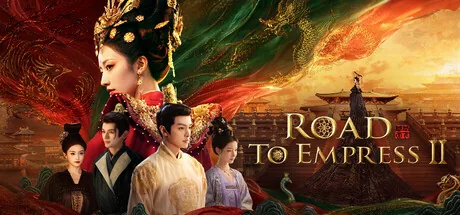
Road to Empress II sells its world through faces and physical detail. The cast has to communicate suspicion, affection, fear, calculation, and shifting loyalty inside scenes that may branch after a single response. When the game is working, the player is not merely selecting an option; the player is studying pauses, glances, rank, and political context before committing.
Costumes, makeup, ceremonial spaces, lighting, and large ensemble scenes give the sequel a scale that many FMV games cannot match. Even players who criticize the script or localization often acknowledge the effort visible on screen. This is the main reason the game can remain engaging through a long runtime.
The sequel is more satisfying when you accept that failure is part of the design. Bad endings reveal hidden rules, achievements point toward overlooked scenes, and route changes can reframe a character you thought you understood. A first playthrough should prioritize instinct; later runs can use a walkthrough, chapter saves, and an ending checklist.
Not every choice creates a completely separate storyline, and some branches reconnect. However, the combination of 57 achievements, multiple failure states, route-specific scenes, and character outcomes creates meaningful replay value for completionists. Players who never replay narrative games will get less value from this structure.
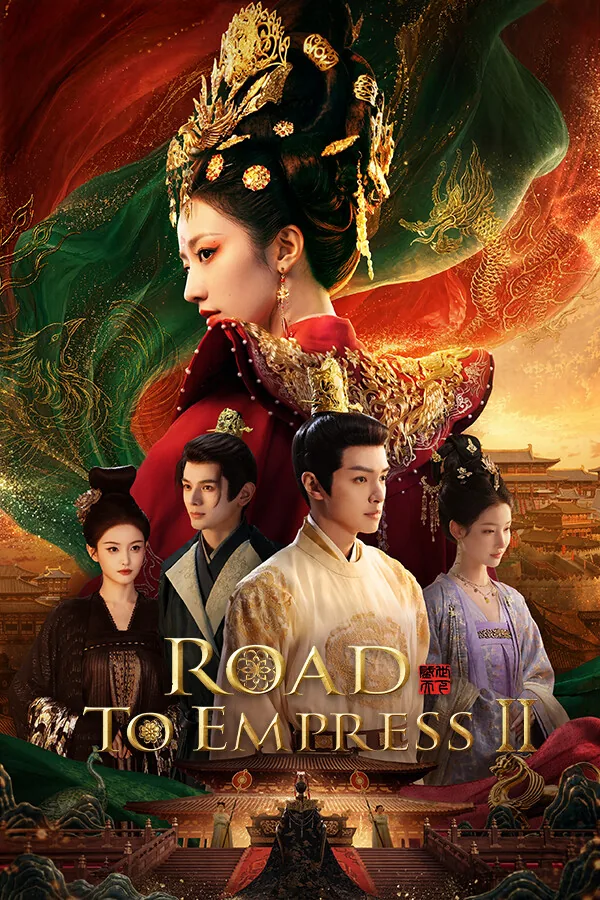
The scale that makes Road to Empress II impressive also exposes its weak points. Long interactive dramas need each branch to feel motivated, but later sections can move quickly between political turns or rely on repeated structural beats. Some scenes land with real emotional force; others feel like connective material between a major decision and its payoff.
This unevenness does not ruin the central journey, but it can make the final stretch feel less controlled than the opening. Players who value atmosphere and character chemistry may forgive the inconsistency. Players looking for a tightly edited prestige drama may notice it immediately.
The English text generally communicates the plot and choice stakes, but it does not always sound natural. Court titles, relationship terms, timing, and concise choice labels are difficult to localize, and awkward phrasing can reduce the impact of a scene. If you understand Simplified Chinese, that is the stronger language option because the game lists full Chinese audio and interface support across many languages.
English-only players can still complete and enjoy the game, especially with patience and contextual reading. The problem is not that the story becomes incomprehensible; it is that a premium live-action drama depends on nuance, and imperfect wording makes subtle scenes feel flatter than the performances deserve.
Steam displays a generative-AI content disclosure for Road to Empress II. The developer states that AI-assisted tools were used for some images, video sequences, interface backgrounds, and portions of music or voice-related production, while emphasizing that the game went through substantial manual editing and does not generate content live during play.
That disclosure does not automatically determine whether the game is good, but it is relevant purchasing information. Some players are comfortable with disclosed assisted assets; others avoid such production practices on principle. The fair review approach is to state the disclosure clearly instead of hiding it or turning it into the only lens through which the entire filmed production is judged.
When checked on July 16, 2026, Steam showed an 86% positive lifetime rating across roughly 3,302 reviews, while the English-language subset was lower at about 76% positive across roughly 390 reviews. These figures can change, but the gap is informative: the broad audience response is strongly positive, while English-language players are more divided.
Review percentages should not replace reading. Positive reviews tend to emphasize acting, immersion, scale, and emotional investment. Critical reviews more often mention localization, pacing, narrative logic, technical or interface friction, and the disclosed use of generative AI. That pattern matches this review's conclusion: Road to Empress II is compelling because of its ambition and presentation, not because every layer is equally polished.
Buy now if you already like interactive movies, Chinese palace drama, branching narrative systems, or achievement-heavy completion. The combination of long filmed content and multiple route outcomes provides substantial value for that audience. It is also a good fit for players who enjoyed the first Road to Empress and want a larger follow-up.
Wait for a sale or more patches if you are English-only, sensitive to uneven localization, or unsure about the slow-burn format. Skip if you need action gameplay, dislike replaying scenes, or have a firm objection to any disclosed generative-AI-assisted assets. The game is easiest to recommend when its specific strengths match your preferences.
Verification
FAQ
Continue the guide